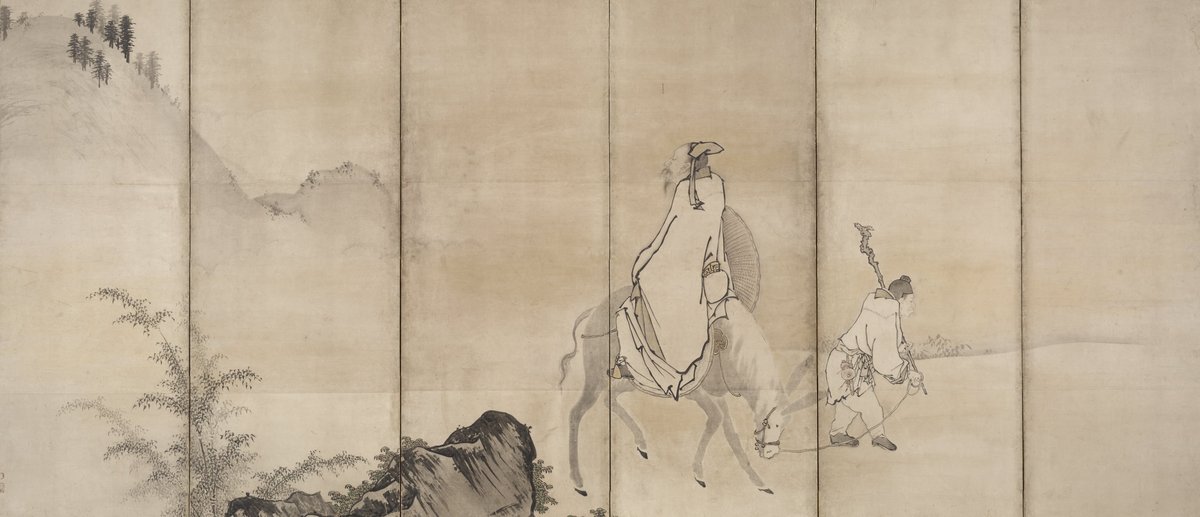
Pan Lang (Han Rō)
Unkoku Tōgan
Unkoku Tōgan’s “Pan Lang (Han Rō)” is part of a pair of six-panel folding screens. Ink, light color, and gold on paper. Created in the early 1600s during Japan’s Momoyama period.
The work reflects Tōgan’s departure from the Kanō school, drawing inspiration from Sesshu’s style. Known for realistic landscapes, Tōgan’s work often features ink on paper.
Tōgan was born into a privileged family in Nagasaki. He became a Buddhist priest and abbot of Unkoku-an Temple later in life.
Cleveland Museum of Art, Cleveland, Ohio. https://clevelandart.org/art/2006.135.2
https://oolf.net/open-art/togan-pan-lang-han-ro/